
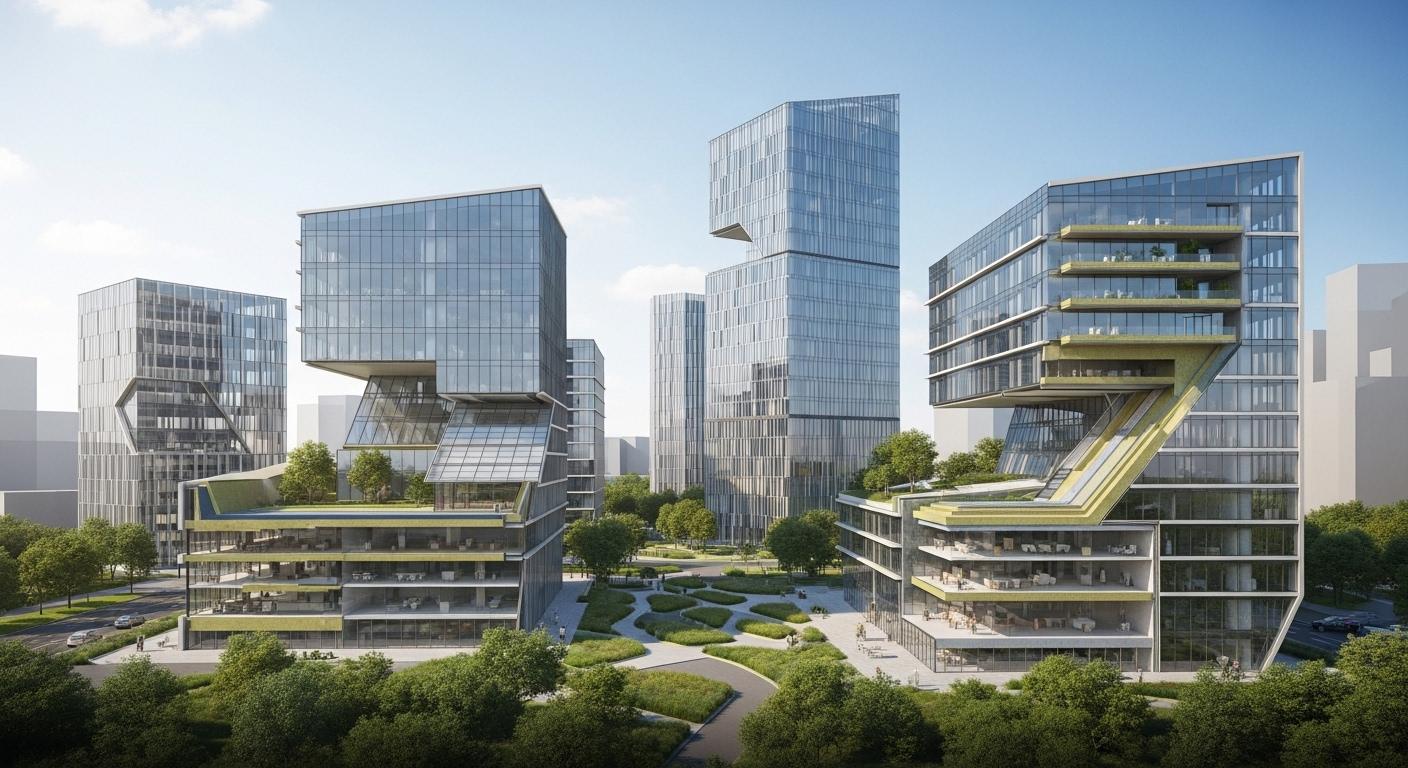
Draft sneaks under the door, socks chilled, breath caught when crossing that room again. Questions about comfort, rising energy costs, insulation, nothing distant, everything immediate. Why hesitate? The insulated kingdom, not just a buzzword, transforms every new address, every school, every clinic built with intent, no detail left to chance. This conversation, not theoretical, but right inside the walls—where construction solves, not just survives.
The insulated kingdom’s meaning in architecture
Terms, trends, philosophies, some concepts never leave the chalkboards, but insulated kingdom, no textbook relic. Step into passive houses of Denmark, fresh clinics of London, everything hums with this holistic promise. No longer a matter of simple attic padding, but bones and skin, roof and floor, forming a seamless whole. Always tempting to cite history, say this thinking arose in nervous ecological debates of the late twentieth century, only urgency spiked by winter 2022’s bills. Forget your fiberglass stories. Visionaries like Wolfgang Feist smashed old habits; he did not see insulation as isolated, he wanted a symphony, every seam sealed, every transition meticulously handled. Further guidance on envelope integration can be found on https://insulated-kingdom.co.uk/ for those seeking practical implementation details.
Also read : Buy andouillettes tradilège nature online for a taste of france
An insulated kingdom tolerates no gaps, not in concept, not in construction, and every zone, even above foot level or below pipes, commands full attention.
Public schools, eco-districts, retrofitted libraries—everywhere the same refrain. Not just accent pieces, but systems speaking together. Forget the attic misconception, glance at city skylines—Tokyo’s new blocks, Oslo’s towers, Toronto’s stubborn old districts, all show walls, roofs, floors fortified, transitions airlocked, windows armored by triple glass, even details invisible but decisive. Drafts, endless bills, cold bridges—no thanks. Thermal serenity, not luxury, but woven into life from the start.
Also to read : What’s the Best Way to Save Space in Your Kitchen?
The components and applications of the insulated kingdom
Walls, thick with mineral wool, dense foam, or panels from crop fields, come together, they host resistance, not resignation. Roofs receive layers—steel or green on top, underlined by foam or sometimes glass, everything joined up. Floors once ignored, now armored with rigid slabs or recycled materials, and not a corner gets skipped. Windows—triple-glazing, thermal break, airtight magic, no shortcuts. Every piece acts as a team, not a collection of individual solutions.
Wonder about practical examples? Schools shifting from shivers to predictable warmth, city halls meeting their energy promises, BRE and Passivhaus labels taking prominence. Hospitals, residential blocks, even century-old heritage buildings under renovation, adopt this integrated stance. Forget an attic-only culture, walk with managers along a building cross-section, every level counts.
The role of the insulated kingdom in energy and sustainability
Pass by twin buildings, one built with meticulous envelope integration, the other with patchwork solutions. The air lingers differently, the street feels it, thermal photos reveal the truth. Up to sixty-five percent less heat lost, bills trimmed, comfort delivered without apology. In London’s newest city halls, combined standards—BREEAM, Passivhaus—push insulation performance sky high, cutting energy needs by seventy percent, data never exaggerated.
Not just avoiding rain or chill, but steadying temperature swings, making architecture accountable for comfort, not just form.
The influence on green building and certification
No shortage of badges: LEED, WELL, BREEAM, Passivhaus, each wanting proof, not marketing phrases. Green certification, once future talk, now ignites real estate value spikes, see Knight Frank’s recent reports. Tenants, developers, weary of headaches—condensation, mold, high bills—demand more, reward projects that deliver measured, integrated thermal performance. No one welcomes a low score in 2026. Careful design, envelopes conceived from initial sketch, not courteous afterthought, smashes through certification with confidence. Healthy spaces, not futuristic but simply expected.
The materials, technology, and tactics behind the insulated kingdom
Materials, always changing, headlines obsessed with the next best thing. Mineral wool, for fire. Spray foam, to twist through chaos behind old walls. Vacuum-insulated panels fit when rooms squeeze every centimeter. Aerogels make headlines for combining thinness and impossible R-values. Hemp, cellulose, plant fiber—low embodied carbon, an environmentalists’ favorite, suddenly affordable as production scales up. Now it’s not just about thermal resistance, but carbon cost, air quality, end-of-life disposal. Health and performance now share the stage, technical press cheers these shifts, and building regulations run to keep pace.
The battle of installation and integration for the insulated kingdom
Not simple, never routine. Every skilled crew faces surprises—budgets turn tight, heritage beams twist and resist, skills lag behind technology. Old houses, with 19th-century quirks, hide rot or pipes, defy planning.
Patience, precision, and clever thinking win converts, each project becomes a case study in adaptation.
Costs threaten to spiral, but smart labor, cut panels, and spray rigs speed progress, though only in skilled hands. Quality control on-site makes or breaks success, a mere inch missed seals in future hardship, not comfort. Integration, never just specification, now demands designers and contractors talk, test, adjust. Best practices do not freeze; RIBA and IEA’s digital resources pulse with annual updates.
The economic and pragmatic dimensions of the insulated kingdom
Budgets stretch, eyes widen, advanced insulation flexes up-front sticker shock. Then, something shifts—yearly bills dive down, maintenance headaches decline, value preserved, and practicalities outweigh hesitation. Scroll the latest European projects, numbers stop being abstract, gains translate to years, not decades.
| Strategy | Initial Cost (€/m²) | Annual Energy Saving (%) | ROI (years) |
|---|---|---|---|
| Classic mineral wool full envelope | 45-55 | 45 | 9-10 |
| Bio-based panels hemp cellulose | 65-85 | 52 | 8-9 |
| Vacuum-insulated panel hybrid | 120-150 | 65 | 5-6 |
| Aerogel system urban retrofit | 190-210 | 70 | 4-5 |
Every euro recouped shortens payback, the European Bank for Reconstruction and Development shows returns thirty percent faster when compared to heating or cooling system upgrades.
Not only budgets, but quality of life steps up, retrofits remake how spaces feel. Developers realize, after decades, that quick fixes last half the building’s lifespan, integrated insulation secures comfort for generations.
The persistent myths and barriers
Dreams sell easily—reality, less so. Up-front costs, always the scapegoat for delays, yet amortized within a decade, less for high-performance work. Complexity rises: sourcing installers, decoding the thicket of regulation, finding trustworthy brands. Even best-in-class insulation fails if builders miss details—unprotected bridges, corners neglected, moisture left unmitigated. Dirty word: condensation. Vital lesson, ventilation always pairs, mechanical, heat-recovery, non-negotiable for healthy air. Industry jargon baffles, government advice only now finding consensus. Attention to detail separates myth from fact, tenacity proves more rewarding than shortcuts.
- Advanced insulation outpaces expectations—reduced bills, less maintenance, consistent comfort
- Up-front costs, though sizable, recoup value faster than traditional solutions
- Real-world integration depends on meticulous installation and cross-disciplinary collaboration
- Misconceptions linger, but verified data and recent high-profile projects clarify the conversation
The future and new trends in the insulated kingdom
Suddenly, the future lands—sensors hidden behind paint, orchestration of thermal comfort minute by minute, insulation that adapts to weather, sun, shade, heatwaves, or unexpected frost. Insulated boundaries learn, machines process risk data, buildings flex with the climate, not against it. Envelope-as-a-service, city-wide retrofits, prefab upgrades, not science fiction, but happening—Stamford’s Green Corridor, magnets for researchers, use 3D-printed algae-infused insulation, tracking comfort by sensor, responding in real time. Codes, dreams, ambitions—nothing static anymore. Architects and builders compete to redefine comfort, sustainability, aesthetics, and wellness, all within the same envelope.
The global spectrum of insulated kingdom strategies
Adoption, never uniform, some regions sprint ahead, others step cautiously, requirements and favorite materials shift with every latitude and risk. Germany, with its relentless winters and appetite for performance, fossilizes mineral wool in code, Passivhaus signatures found in city contracts. Japan’s standards wrangle spray foam with earthquake safety, thermal swings, humidity always in mind. Canada—arctic cold versus urban mildness—wagers on aerogel and VIPs, tailoring for harshness. Australia tests bio-based panels, wildfires steering decisions as much as summer scorch. Numbers speak louder than slogans:
| Country/Region | Adoption Level | Key Materials & Regulations | Climate Focus |
|---|---|---|---|
| Germany | Very high | Mineral wool Passivhaus | Cold winters urban |
| Japan | Medium-high | Spray foam seismic standards | Humidity temp swings |
| Canada | High | Aerogel vacuum panels | Arctic milder zones |
| Australia | Medium | Bio-based Standard AS/NZS 4859 | Summer heat bushfire |
Not bounded by borders, insulation culture flexes, bends, answers heat, freeze, flood, or fire.
Still, imagery not always in glossy magazines but in lives changed. A design manager in Bristol tells of a hospital site, crews at the brink—tired of learning new ways, doubting the worth of seam after endless seam. Then one night, Maddy, the youngest forewoman, stops grumbling. Her daughter, chronically coughing, finally breathes free and sleeps deeply in the freshly upgraded ward. That result, nobody debates—comfort, security, health, not theory, not marketing, but life. The insulated kingdom, not abstract and not a fleeting trend, imprints a signature on every project that dares to reach beyond the bare minimum. Architecture in 2026 never recognizes its own boundaries but instead envelops tomorrow’s demands, one sealed seam at a time.
So why does insulated kingdom matter? Energy saved, security gained, comfort proven—its story, never finished.